Bioenergy Experiments and Real Testing in Practice
Bioenergy experiments allow you to stop believing blindly and start testing directly.
What if bioenergy is not only a theory, but something you can explore through simple experiments in real conditions?
Most people talk about bioenergy, but very few actually test it. Instead of personal experience, they rely on other people’s opinions, assumptions, or theories.
Bioenergy experiments change that approach.
They allow you to observe how your body reacts to focus, presence, and inner state without the need for blind belief.
What Are Bioenergy Experiments
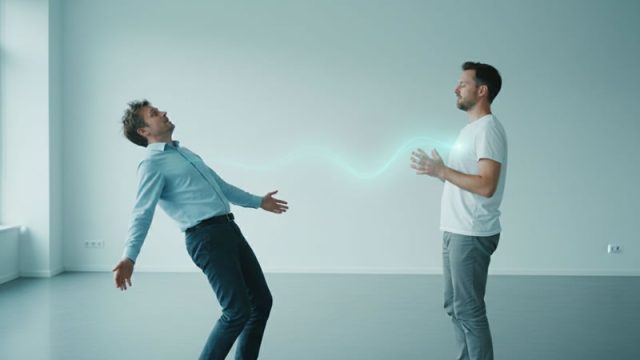
Bioenergy experiments are simple tests where you observe how your body and another person’s body may react without physical contact.
The goal is not to prove something in advance.
The goal is to observe what happens.
In these experiments, you use:
focus
attention
presence
stable inner state
body awareness
In this context, bioenergy is not viewed as something that must be transferred from one person to another. It is viewed as a state that may create a reaction.
That is why bioenergy experiments are important.
They move the subject away from theory and into practice.
A Simple Bioenergy Experiment You Can Try
Here is one of the simplest bioenergy experiments you can try.
Stand in front of another person.
No touch.
No warning.
No explanation.
Direct your attention toward that person.
Stay calm and stable.
Do not make sudden movements.
Do not try to force a reaction.
Just focus.
Then observe what happens.
This simple experiment helps you see whether the other person’s body reacts to your state, attention, and presence.
The goal is not performance.
The goal is observation.
Possible Reactions During Bioenergy Experiments
Reactions during bioenergy experiments can be different from person to person.
Some people may react more clearly.
Others may react more subtly.
Possible reactions include:
slight loss of balance
body movement
change in posture
feeling of instability
change in focus or attention
spontaneous body response
It is important to understand that even the smallest change may have value.
Bioenergy often appears through subtle reactions that require attention.
A small shift in balance can matter.
A short body reaction can matter.
A change in posture can matter.
This is why careful observation is essential.
Why Bioenergy Experiments Work
The body does not react only to physical contact.
The body may also react to the state of another person.
When focus is stable and presence is clear, an interaction may happen between two people. This interaction does not have to mean that bioenergy is transferred like a physical substance.
It may mean that the body is responding to a state.
In other words:
It is not only about someone “sending bioenergy.”
It is about the state of one person activating a reaction in another.
This process can be observed through practice without the need for complicated explanations.
Bioenergy Experiments and Perception
One of the key factors in bioenergy experiments is perception.
If you do not observe carefully, you may miss the reaction.
Most people expect:
large movements
obvious reactions
instant results
dramatic effects
But reality is often different.
Reactions can be:
subtle
short
barely noticeable
easy to ignore
Only when you begin to pay attention to details do bioenergy experiments start to make sense.
The body may respond before the mind understands what is happening.
That is why observation is more important than expectation.
How to Improve Bioenergy Experiment Results
If you want clearer results in bioenergy experiments, pay attention to a few simple things.
Calm your breathing.
Stabilize your focus.
Avoid tension.
Do not expect a specific result.
Do not force the process.
The more relaxed and present you are, the clearer the reactions may become.
Bioenergy in this context is not something you force.
It appears more clearly when the state is stable.
A tense body creates unclear results.
A calm body allows better observation.
Common Mistakes in Bioenergy Experiments
People often make the same mistakes when doing bioenergy experiments.
They try too hard.
They expect fast results.
They analyze instead of observing.
They look for spectacular effects.
They become tense.
They try to prove something immediately.
This approach can block the natural reaction.
Bioenergy experiments require simplicity.
They require repetition.
They require patience.
The goal is not to impress anyone.
The goal is to observe what the body does.
Bioenergy Experiments as Personal Experience
The greatest value of these experiments is personal experience.
Instead of believing or rejecting in advance, you can test.
Through repetition, you begin to understand:
how your body reacts
how other people react
how focus affects the body
how presence changes the state
how bioenergy may appear in practice
This understanding does not come from theory.
It comes from practice.
It comes from direct observation.
It comes from seeing what happens in real conditions.
Real Bioenergy Testing Without Belief
Bioenergy experiments do not require blind belief.
They also do not require blind rejection.
The best approach is simple:
test
observe
repeat
compare
If there is a reaction, observe it.
If there is no reaction, change the conditions and test again.
This is the honest way to approach bioenergy.
Not through fantasy.
Not through denial.
But through practice.
Real Bioenergy Experiments on Video
If you want to see real bioenergy experiments in practice, watch the demonstrations on my YouTube channel.
On Berislav Hermeščec Official, you can see people reacting without physical contact. You can observe balance changes, body movements, spontaneous reactions, and real no-touch experiments.
Do not believe blindly.
Watch carefully.
Observe the reactions.
Then decide for yourself.
Conclusion
Bioenergy experiments are not just an idea.
They are a way to observe what happens through direct experience.
You do not have to believe.
You can test.
You can observe.
You can repeat.
And in that testing, real understanding begins.
Subscribe to my YouTube channel and watch real bioenergy experiments in practice:
For Croatian readers, I also created a dedicated page about bioterapija, bioenergija and bioterapeut.